

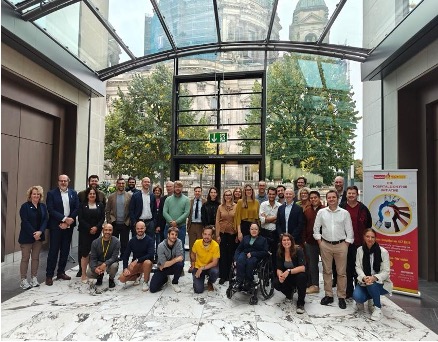
Hospitals on FHIR User Days, October 9-10, 2025, was an exciting, dynamic gathering of healthcare professionals, IT leaders, vendors, and HL7® FHIR® enthusiasts working to bring real interoperability to hospital systems across Europe. With a packed agenda focused on practical experiences, technical innovation, and digital transformation, the event offered a rich platform for collaboration and insight.
The day kicked off with a deep dive into the Hospital on FHIR Maturity Model and the evolving European Electronic Health Record Exchange Format (EEHRxF), highlighting how HL7 FHIR is becoming the backbone of scalable, cross-border health data exchange.
Hospital’s HL7 FHIR Implementation Experience Sessions
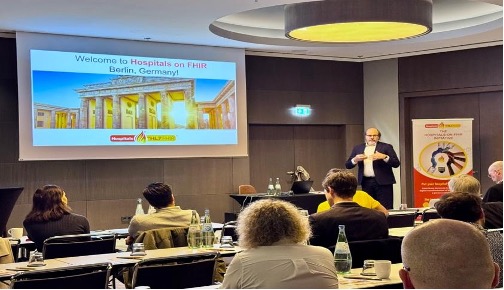
A standout feature of every Hospitals on FHIR User Days event is the Hospital’s HL7 FHIR Implementation Experiences session series. These sessions provide a valuable platform for showcasing the real-world adoption of HL7 FHIR across European hospitals. Healthcare IT experts share practical insights, from improving internal data workflows to tackling regional and national integration challenges, offering lessons learned, success stories, and honest reflections. At the Berlin edition, this popular series included four well-attended sessions, each highlighting the progress and challenges hospitals face on their path to interoperability.

An engaging session highlighted the recently completed PanCareSurPass project, focusing on the lifelong needs of childhood and adolescent cancer survivors.
Central to the project is the “Survivorship Passport”, a digital tool that equips survivors and their healthcare providers with a comprehensive treatment summary and personalized follow-up care recommendations, based on international clinical guidelines. A significant focus of the session was interoperability. The project showcased how the Survivorship Passport integrates with electronic medical records (EMRs) using HL7 FHIR standards, enabling the semi-automated or automated exchange of health, treatment, and diagnostic data across systems. This seamless integration supports more coordinated, efficient, and patient-centred long-term care. The event included a discussion of how PanCareSurPass and xShare are complementary projects, with their patient-centric workflows, EHDS strategic and policy connections, and a common data language (HL7 FHIR and the EEHRxF).

It was noted that the xShare Yellow Button could deliver Survivorship Passport information (i.e., medical history and care plans) to benefit all stakeholders, but most of all childhood and adolescent cancer survivors. The opportunity for vendors to provide xShare button components for patient-facing apps of hospitals and health providers was raised.
One of the key technical discussions focused on the migration from legacy health IT standards to FHIR-based infrastructures—a complex yet critical step in achieving true interoperability. Topics included data mapping and transformation, maintaining data integrity during migration, aligning with current regulatory requirements, and ensuring backward compatibility with existing systems. Presenters shared real-world strategies for managing this transition, highlighting both technical hurdles and the maturity model steps needed to support health data exchange using HL7 FHIR.

The XiA (Xpanding Innovative Alliance) project is a European initiative focused on strengthening digital health interoperability skills across Europe, particularly in light of the evolving regulatory landscape of the European Health Data Space (EHDS). Building on the foundations laid by the XpanDH project, which developed early training resources in digital health interoperability, XiA takes this work further by designing and producing comprehensive educational frameworks and training materials, and by conducting skills and needs mapping. A key objective is to create inclusive and accessible training programmes, ensuring that the future workforce is equipped with the skills needed to navigate and implement interoperable digital health solutions across Europe.
Patient empowerment also took center stage during the FHIR Powered Patient Engagement session, where attendees explored how APIs and apps equipped with the xShare Button are reshaping the patient experience, giving individuals more control over their data and care.

No digital health discussion is complete without cybersecurity, and the session on old and new threats and the FHIR Action Plan was both timely and essential. As hospitals become increasingly digital, the security of health data demands urgent and ongoing attention.
The event also included a forward-looking session on the Digital Transformation of Medical Product Information in Hospitals, part of the Gravitate-Health project, emphasizing the critical role of Electronic Product Information (ePI) delivered in a structured, machine-readable format that can be seamlessly integrated into hospital information systems. Unlike static, paper-based leaflets, ePI enables real-time access to the most current and accurate product information, including dosing, contraindications, interactions and administration guidance. This enhances medication safety by reducing the risk of errors at the point of care and supporting clinical decision support systems, prescribing practices, and treatment plans. The session highlighted how ePI is not just a regulatory or compliance tool, but a vital enabler of safer, more efficient, and more personalized patient care. A significant focus was the inclusion of the patient perspective in managing information related to medications dispensed at discharge, as well as broader medical instructions and follow-up activities. Empowering patients with transparent, accessible, and standardized information was highlighted as a key step toward safer, more effective care transitions.
Conclusion
The Hospitals on FHIR User Days proved that FHIR is more than a standard; it’s a movement. With continued collaboration and shared learning, hospitals across Europe are not just talking about interoperability, they’re building it.
Join the Hospital on FHIR Community of Practice to support HL7 FHIR interoperability maturity at your hospital!
The Hospitals on FHIR User Days – Berlin Organizing Committee extends its sincere thanks to all attendees, speakers, and sponsors for their invaluable support and contributions to the success of the event
Thanks to our Co-Chairs Stefano Dalmiani and Maria Manuel Salazar, the HL7 Europe Hospitals on FHIR Steering Committee for organizing this event, and to Dr. Eugenia Rinaldi and Dr. Sylvia Thun for hosting this German event!
Sincere thanks to our Gold, Silver and Bronze sponsors for making this event a reality. Thanks for the great collaboration!
European Projects
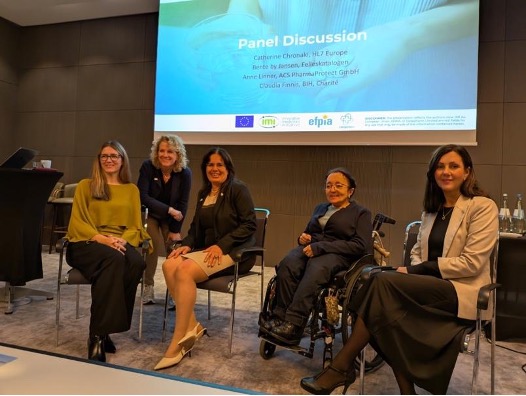
HL7 Europe is actively involved in EU-funded projects that promote the development and adoption of interoperability standards and specifications for digital health. Through this work, HL7 Europe contributes to building a unified European digital health and data infrastructure that benefits all EU citizens. The projects highlighted below were featured on the agenda of the Hospitals on FHIR User Days event, with presentations and the panel discussion highlighted above. For more information on these projects, visit: https://hl7europe.org/projects-initiatives/