


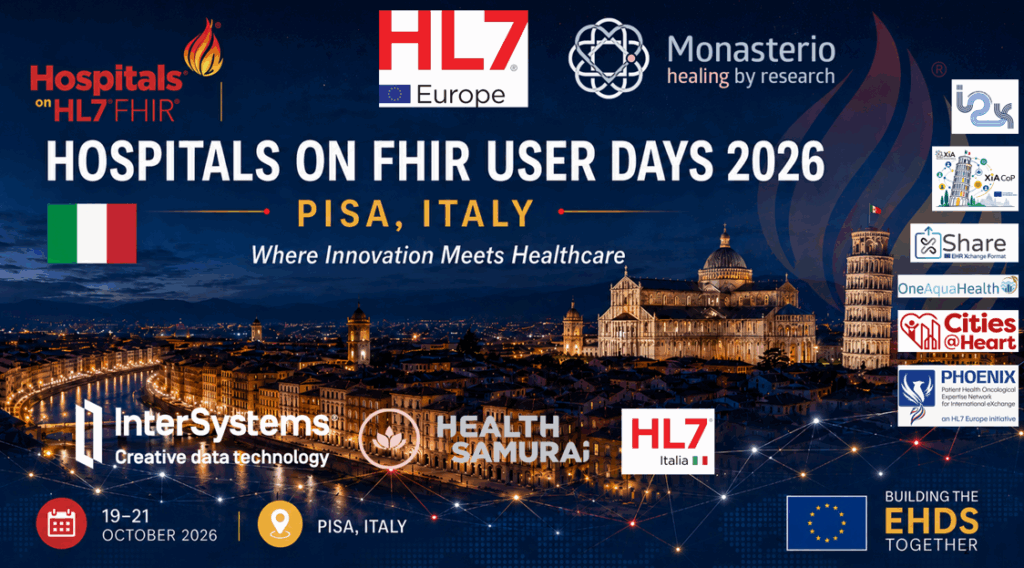
October in Tuscany brought together healthcare leaders, clinical champions, enterprise architects, and software innovators for the 4th edition of Hospitals on FHIR (HoF) User Days, held from October 19–21, 2026, at Fondazione Monasterio Hospital in Pisa, Italy. The event marked an important milestone in moving FHIR from standard specification into operational clinical reality across European and global hospital networks.
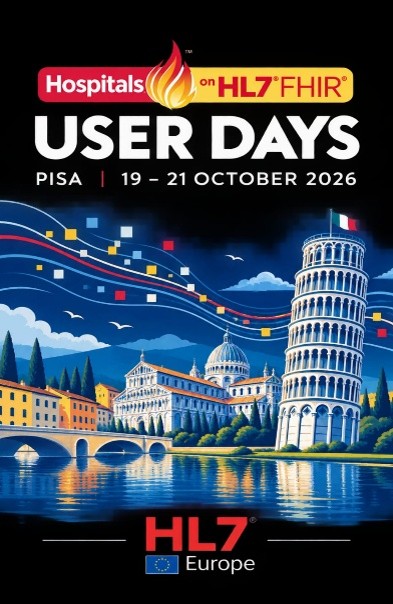
Over three dynamic days, the gathering showed how hospitals are taking the driver’s seat in interoperability, turning regulatory mandates into scalable clinical workflows and data-driven care.
A Thriving, International Hospital Network
The scale of this year’s User Days reflects the rapid acceleration of FHIR adoption within hospital wards:
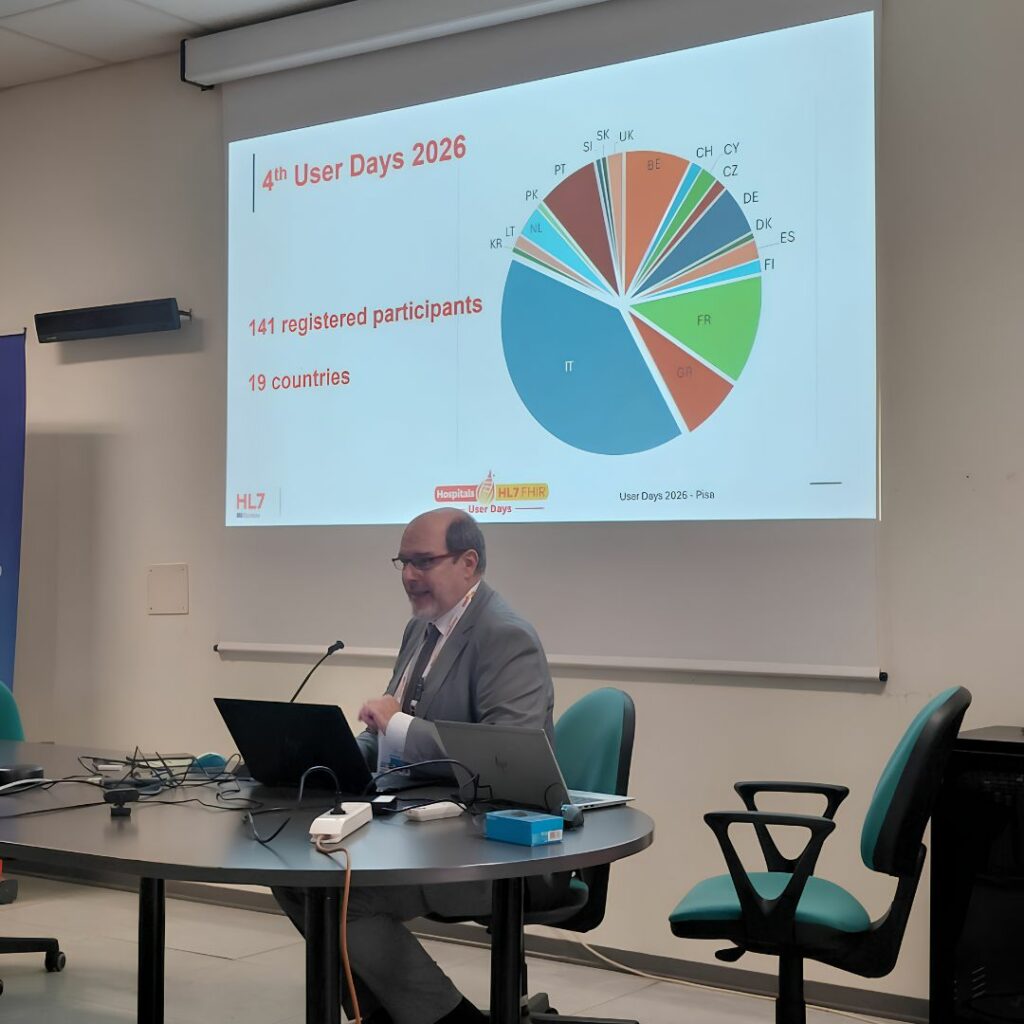
- 150 registered participants from 19 nations across Europe, North America, and Asia, representing a growing community of over 140 hospitals and healthcare provider organizations, supported by 22 health IT solution providers.
- A vibrant network of National Ambassadors representing over a dozen countries—including France, Germany, Belgium, Portugal, Italy, Lithuania, Norway, Ireland, Spain, Poland, and Slovakia—is driving cross-border knowledge transfer and grassroots hospital onboarding.
The message from Pisa was unequivocal: interoperability is no longer a theoretical debate; it is an urgent operational requirement for patient safety, workforce efficiency, and collaborative research.
Tackling Regulations, Cyber Resilience, and AI
The conference agenda blended strategic policy with deep engineering insights:
- Navigating the European Health Data Space (EHDS): High-level briefings from European Commission SANTE representatives and HL7 Europe leadership focused squarely on the upcoming March 2027 technical specifications for EEHRxF (European Electronic Health Record Exchange Format) based on FHIR.
- Compliance & Infrastructure Hardening: Experts examined the practical impact of the NIS2 Directive and the Cyber Resilience Act (CRA) on hospital digital infrastructure, establishing cybersecurity baselines essential for cross-border health data flows and implications for FHIR adopters. A new Working Group in HoF was launched to study solutions applicable for Hospitals.
- Real-World Clinical Workflows: Frontline teams showcased live FHIR deployments—from transmural home hospitalization at KUL Hospital in Belgium, to telerehabilitation at Monasterio in Italy, and modular FHIR oncology pipelines at IRCCS-IRST and CHRU Nancy.
- AI on FHIR: Institutions demonstrated practical applications merging Artificial Intelligence with FHIR structures to unlock unstructured bedside data. A new Working Group in HoF was launched to expand these activities.
Action in the Lab: Testing, Research, and Prototyping
Day 3 turned strategy into execution with four concurrent, high-intensity parallel tracks:
- The i2X-a-thon: Two days of hands-on, multi-tier testing of the European EHR Exchange Format across five priority domains: Patient Summaries, ePrescriptions/eDispensations, Laboratory Results, Medical Imaging, and Hospital Discharge Reports.
- xShare Clinical Research Demonstration Day: Live demonstrations showing how the xShare “Yellow Button” and IPS+ (International Patient Summary for Research) bridge the gap between hospital EHRs, patient-mediated sharing, and clinical research data repositories (EDC), dramatically simplifying study feasibility and cohort tracking.
- PHOENIX Initiative Kick-Off: The official European launch of PHOENIX, an HL7 Europe initiative committed to standardizing cancer tracking through a unified European Common Cancer Data Model (ECCDM).
Anchoring National Momentum: The HoF Italia Chapter
A major highlight of the meeting was the official launch of the Hospitals on FHIR Italia Chapter.
Recognizing Italy’s ambitious national digital health initiatives, the launch was complemented by a high-level roundtable bringing together the Italian National Health Service (SSN), regional health authorities (including Emilia-Romagna and ASL Salerno), hospital management associations (Federsanità, SIMM), and scientific bodies (AIOM, SIHTA, SIIAM). The session established an Italian data strategy designed to bridge regional implementations with the broader European Health Data Space through EEHRxF and HL7 FHIR.
Community, Culture, and Next Steps
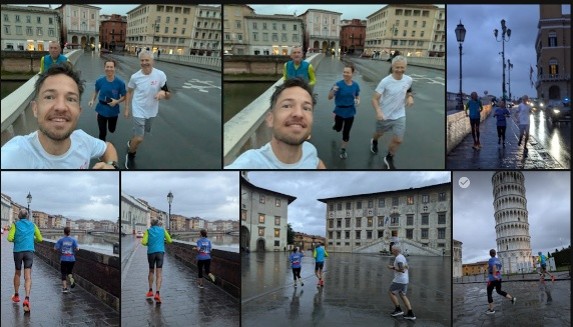
Interoperability is fundamentally built on human connections. Beyond the technical sessions, the community connected during evening discussions at social events and laced up early Wednesday morning for the 5 km “FHIR Your Heart” Interoperability Run through Pisa’s historic streets.
The take-home message reminded us: “Hospitals on FHIR is not a single point of view on FHIR adoption. It is a collection of views—that’s why it works!”
No single hospital, EHR vendor, or health authority has all the answers. By openly sharing our reference architectures, production challenges, and implementation guides, we ensure every healthcare institution—regardless of its current digital maturity—has a direct pathway into the future of connected care.
We invite healthcare provider organizations around the world to join the Hospitals on FHIR community, connect with your local National Ambassador, and place your organization on the global FHIR maturity map at hospitalsonfhir.eu.

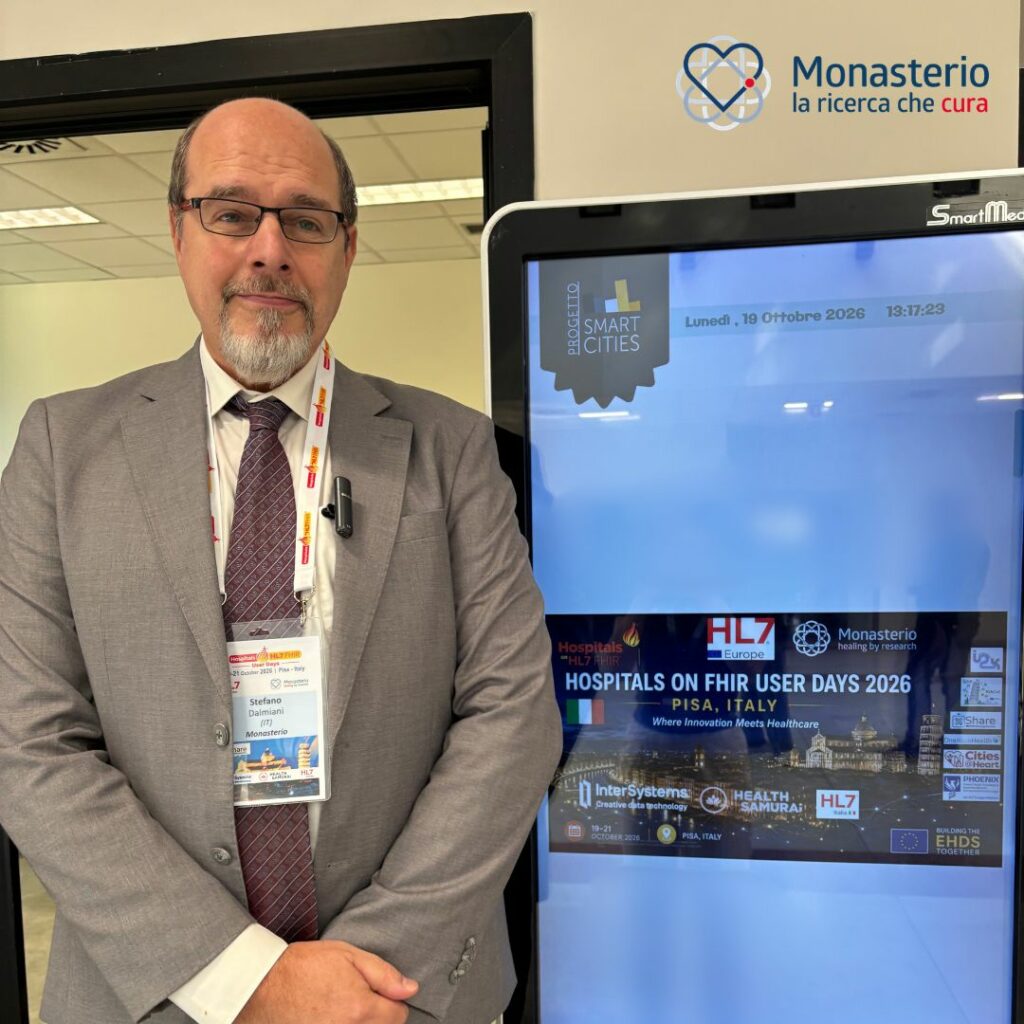
Stefano Dalmiani
Board Member, HL7 Europe